Elizabeth Smart Kidnapping
ConvictedSalt Lake City, UT· 2002
Elizabeth Smart Kidnapping
kidnappingutahchild-victimfound-alivereligious-extremism
Updated April 28, 2026
Location
Salt Lake City, UT
Incident
June 5, 2002
Resolved
March 12, 2003
Status
ConvictedType
kidnapping
Victim
Elizabeth Smart
On June 5, 2002, fourteen-year-old Elizabeth Smart was abducted at knifepoint from her Salt Lake City home by Brian David Mitchell, a self-proclaimed prophet who had previously worked as a handyman for the Smart family. Smart was held captive for approximately nine months by Mitchell and his wife Wanda Barzee before being rescued on March 12, 2003, in Sandy, Utah. Mitchell was convicted of federal kidnapping charges and sentenced to life in prison, while Barzee received a 15-year sentence; Smart has since become a prominent national advocate for missing children and sexual assault survivors.
On the night of June 5, 2002, fourteen-year-old Elizabeth Ann Smart was taken at knifepoint from the bedroom she shared with her younger sister Mary Katherine in the family's Federal Heights home in Salt Lake City, Utah [1]. The abductor was Brian David Mitchell, a drifter and self-proclaimed religious prophet who had previously done roofing work for the Smart family after Elizabeth and her mother encountered him panhandling in the fall of 2001 [4]. Mitchell forced Elizabeth to hike to a crude campsite in Dry Creek Canyon, a few miles from her home, where his wife Wanda Barzee was waiting [1].
For the next nine months, Smart was held in captivity under horrific conditions. Mitchell, who styled himself as a divine messenger called "Immanuel," subjected Elizabeth to daily sexual assaults, restrained her with a cable attached to trees, and threatened to kill her and her family if she tried to escape [1][2]. The captors moved Elizabeth between locations, including campsites near Salt Lake City and, beginning in September 2002, homeless encampments in San Diego County, California [1][4].
The search for Elizabeth became one of the most high-profile missing-person cases in the United States. Thousands of volunteers joined search efforts in the weeks after her disappearance [1]. Early in the investigation, authorities focused on Richard Ricci, a career criminal who had also worked for the Smart family. Ricci was arrested on a parole violation on June 14, 2002, and died of a brain hemorrhage in prison on August 30, 2002, without being definitively connected to the kidnapping [4].
The breakthrough came from within the Smart family. On October 12, 2002, Mary Katherine Smart recognized the voice of the kidnapper as that of the man they had known as "Immanuel" -- the handyman who had worked on their roof [1][4]. On February 3, 2003, the Smart family publicly released a police sketch of Mitchell. The sketch was subsequently featured on the television program America's Most Wanted on February 15, 2003, leading Mitchell's relatives to identify him and provide photographs to investigators [1][4].
Elizabeth herself convinced Mitchell to return to Utah from California in late February 2003 [4]. On March 12, 2003, two separate couples recognized Mitchell walking with Barzee and a disguised young woman on a street in Sandy, Utah, approximately 18 miles from the Smart home [1][2]. Elizabeth was wearing a gray wig, sunglasses, a veil, and a t-shirt wrapped around her head [1]. The witnesses called police, who responded immediately. When first questioned, Elizabeth initially denied her identity, calling herself "Augustine," but officers confirmed who she was [3]. Both Mitchell and Barzee were arrested on the spot, and Elizabeth was reunited with her family that same day [1][2].
The legal proceedings were protracted and complex. Both Mitchell and Barzee were initially found incompetent to stand trial in state court in July 2005, and Mitchell was hospitalized at the Utah State Hospital [1]. In March 2008, a federal grand jury indicted both defendants on charges of interstate kidnapping and unlawful transportation of a minor [4]. Barzee eventually cooperated with prosecutors and pleaded guilty to federal charges on November 17, 2009 [5]. On May 21, 2010, U.S. District Judge Dale Kimball sentenced Barzee to 15 years in federal prison, with credit for time served dating back to her March 2003 arrest [5][6]. She also received a concurrent state sentence of one to 15 years for the attempted kidnapping of Elizabeth's cousin on July 24, 2002 [5][6].
Mitchell was finally ruled competent to stand trial on March 1, 2010. His federal trial began on November 1, 2010, in Salt Lake City [1][4]. Elizabeth Smart, then 23, testified in detail about her ordeal. On December 10, 2010, a jury found Mitchell guilty of kidnapping and unlawful transportation of a minor [2][3]. On May 25, 2011, Mitchell was sentenced to life in federal prison without the possibility of parole [2][7]. At sentencing, Smart addressed Mitchell directly, stating: "You took away nine months of my life that can never be returned" and "You will never affect me again" [2]. Mitchell is currently incarcerated at Federal Correctional Institution Lewisburg in Pennsylvania [1].
Barzee was released from prison on September 19, 2018, after receiving credit for time served in federal custody that had not previously been applied to her sentence [1][4]. Her early release alarmed the Smart family and the public. On May 1, 2025, Barzee was arrested again for violating sex offender registration requirements [4].
Since her rescue, Elizabeth Smart has become one of the most prominent advocates for missing children and survivors of sexual violence in the United States. In 2011, she founded the Elizabeth Smart Foundation, which operates programs including Smart Defense, a self-defense curriculum combining martial arts with sexual violence prevention education, and the Survivor Support Fund, which provides direct financial assistance to survivors [8][9]. She has helped promote the National AMBER Alert system and the Adam Walsh Child Protection and Safety Act [8]. Smart published her memoir, My Story, in October 2013 and has appeared in numerous documentaries about her experience, including a Netflix documentary that premiered in January 2026 [4][9]. She married Matthew Gilmour in 2012 and is the mother of three children [1]. Smart has also developed the "Wholehearted Consent" educational program for teenagers and continues her public advocacy through speaking engagements and her Smart Talks podcast [8][9].
- [1]Kidnapping of Elizabeth Smart - Wikipedia
- [2]Brian David Mitchell sentenced to life in prison for Elizabeth Smart kidnapping - CBS News
- [3]Police recover Elizabeth Smart and arrest her abductors - HISTORY
- [4]Elizabeth Smart: A Full Timeline of Her Kidnapping, Rescue, and Life Today - Biography
- [5]Barzee sentenced to 15 years in prison for Smart abduction - KSL
- [6]Elizabeth Smart kidnapper apologizes to family at sentencing - CNN
- [7]Elizabeth Smart Fast Facts - CNN
- [8]Elizabeth Smart Foundation
- [9]20 years after she was rescued from kidnapping, Elizabeth Smart is out with a course about consent - CBS News
Charges and Indictments
Brian David Mitchell and Wanda Barzee were initially charged in Utah state court following their arrest on March 12, 2003 [1]. However, repeated competency disputes stalled state proceedings. Both defendants were found incompetent to stand trial in state court in July 2005, and Mitchell was committed to the Utah State Hospital [1][4]. In March 2008, a federal grand jury in Salt Lake City returned an indictment charging both Mitchell and Barzee with kidnapping (18 U.S.C. 1201) and unlawful transportation of a minor across state lines (18 U.S.C. 2423), based on the movement of Elizabeth Smart from Utah to California during her captivity [1][4].
Barzee's Plea Agreement and Sentencing
Wanda Barzee entered into a plea agreement with federal prosecutors. On November 17, 2009, she pleaded guilty to federal charges of kidnapping and unlawful transportation of a minor [5]. As part of the agreement, Barzee agreed to cooperate in both state and federal proceedings against Mitchell [5]. In February 2010, Barzee also pleaded guilty but mentally ill in Utah state court to one count of conspiracy to commit aggravated kidnapping, related to the attempted abduction of Elizabeth Smart's cousin on July 24, 2002 [5][6]. In exchange, prosecutors dropped the state kidnapping charges connected to Elizabeth's abduction [5].
On May 21, 2010, U.S. District Judge Dale Kimball sentenced Barzee to 15 years in federal prison [5][6]. The judge granted a degree of leniency by backdating the sentence to March 12, 2003 -- the date of Barzee's arrest -- effectively crediting her for approximately seven years already served [5][6]. That same day, Third District Judge Judith Atherton imposed a concurrent state sentence of one to 15 years for the attempted kidnapping charge [5]. Barzee addressed the Smart family at sentencing, saying: "I know the gravity of my crimes and how severe they have been, and I'm just so sorry, again, for all the pain and suffering I have caused upon the Smart family" [6].
Mitchell's Competency Proceedings
The question of Brian David Mitchell's mental competency dominated years of legal proceedings. Mitchell was twice found incompetent to stand trial in Utah state court, in 2004 and again in 2005 [1]. He spent years at the Utah State Hospital, where clinicians debated whether his religious delusions were genuine mental illness or deliberate manipulation [1]. The transfer of the case to federal court in 2008 allowed for fresh competency evaluations. On March 1, 2010, a federal judge ruled Mitchell competent to stand trial, finding that while Mitchell suffered from personality disorders, he understood the proceedings and could assist in his own defense [1][4].
Mitchell's Federal Trial and Conviction
Mitchell's federal trial commenced on November 1, 2010, before a jury in the U.S. District Court for the District of Utah [1][4]. Elizabeth Smart, then 23 years old, was the prosecution's key witness. She testified over the course of several days about the circumstances of her abduction, the daily sexual assaults she endured, and the conditions of her captivity [2]. Mitchell's defense argued that he was not guilty by reason of insanity, contending that his religious beliefs rendered him unable to appreciate the wrongfulness of his actions [1].
On December 10, 2010, the jury rejected the insanity defense and found Mitchell guilty on both federal counts: kidnapping and unlawful transportation of a minor [2][7]. The conviction came more than eight years after the kidnapping itself [2].
On May 25, 2011, Mitchell was sentenced to two consecutive life terms in federal prison without the possibility of parole [2][7]. At the sentencing hearing, Elizabeth Smart addressed Mitchell directly for the first time, telling him: "You took away nine months of my life that can never be returned" and declaring, "You will never affect me again" [2]. Mitchell is currently housed at the Federal Correctional Institution in Lewisburg, Pennsylvania, after being transferred following security incidents at a previous facility [1][7].
Barzee's Release and Subsequent Arrest
Barzee was unexpectedly released from federal prison on September 19, 2018, after the Utah Board of Pardons and Parole determined that she had not received proper credit for time served in federal custody prior to sentencing [1][4]. Her early release drew public concern and criticism from the Smart family. Following her release, Barzee was required to register as a sex offender in Utah [1]. On May 1, 2025, Barzee was arrested for violating sex offender movement restrictions [4][7].
Legal Significance
The Elizabeth Smart case had significant implications for federal kidnapping law and missing-children policy. The case highlighted the limitations of state competency proceedings and demonstrated the utility of parallel federal jurisdiction in cases involving interstate criminal conduct [1]. Elizabeth Smart's subsequent advocacy contributed to strengthening the National AMBER Alert system and the passage of the Adam Walsh Child Protection and Safety Act of 2006, which established a national sex offender registry and imposed stricter registration requirements [8].
- [1]Kidnapping of Elizabeth Smart - Wikipedia
- [2]Brian David Mitchell sentenced to life in prison for Elizabeth Smart kidnapping - CBS News
- [4]Elizabeth Smart: A Full Timeline of Her Kidnapping, Rescue, and Life Today - Biography
- [5]Barzee sentenced to 15 years in prison for Smart abduction - KSL
- [6]Elizabeth Smart kidnapper apologizes to family at sentencing - CNN
- [7]Elizabeth Smart Fast Facts - CNN
- [8]Elizabeth Smart Foundation
Key eventSupporting
2011
May 25, 2011
Mitchell Sentenced to Life in Prison
Federal Judge Dale Kimball sentences Brian David Mitchell to two concurrent life sentences, plus 15 additional years. Wanda Barzee, who pleaded guilty in 2009, had already been sentenced to 15 years.
Source →2010
December 10, 2010
Mitchell Convicted of All Federal Charges
Following multiple competency delays, Brian David Mitchell is convicted of kidnapping and transportation for sexual activity in federal court. Elizabeth Smart testified in detail during the trial.
Source →2003
March 12, 2003
Elizabeth Smart Found Alive in Sandy, Utah
A passing couple recognizes Mitchell and Barzee — who had appeared on America's Most Wanted — walking with a disguised young woman along a Sandy, Utah street. Police are called and Elizabeth Smart is identified and freed, nine months after her abduction.
Source →2002
October 1, 2002
Mary Katherine Identifies "Emmanuel"
Elizabeth's sister Mary Katherine tells her parents she recognizes the kidnapper's voice as that of "Emmanuel," a street preacher who had briefly worked at their home. The detail renews focus on Mitchell as a suspect, though he is not immediately located.
Source →June 5, 2002
Elizabeth Smart Kidnapped from Her Bedroom
Brian David Mitchell enters the Smart home in Salt Lake City and abducts 14-year-old Elizabeth Smart at knifepoint. Her sister Mary Katherine, 9, witnesses the abduction but remains silent out of fear. The family discovers Elizabeth missing several hours later.
Source →Loading…
Relationship data not yet mapped — nodes positioned by force simulation.
Victim
Suspect / Convicted
Unknown Subject
Witness
Investigator
Attorney
Family

Victim
arrow_forward
Elizabeth Smart
Kidnapping victim, advocate, author
Elizabeth Smart was 14 when she was kidnapped from her Salt Lake City home on June 5, 2002. Found alive nine months later, she became a prominent child safety advocate and has authored two books about her experience.
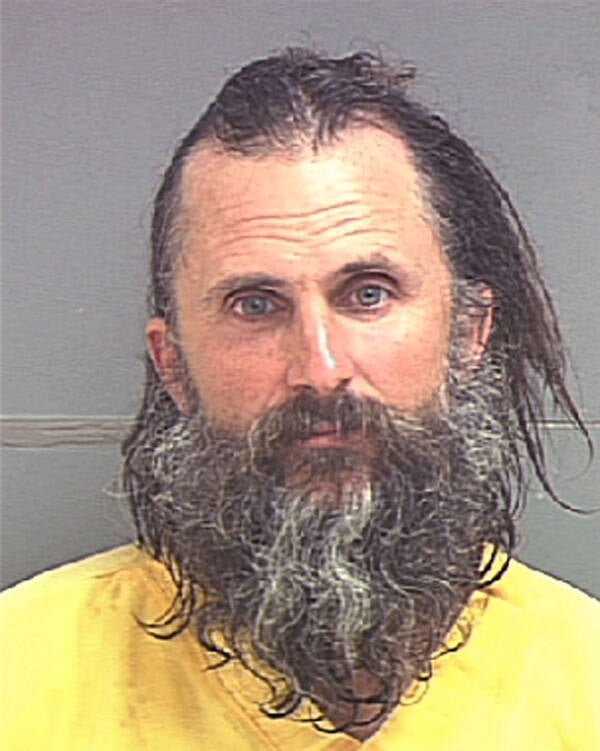
Convicted
arrow_forward
Brian David Mitchell
Primary kidnapper of Elizabeth Smart
Brian David Mitchell, known as "Emmanuel," was a self-styled street prophet who kidnapped Elizabeth Smart and held her captive for nine months. Convicted of federal kidnapping charges in 2010, he is serving two concurrent life sentences.
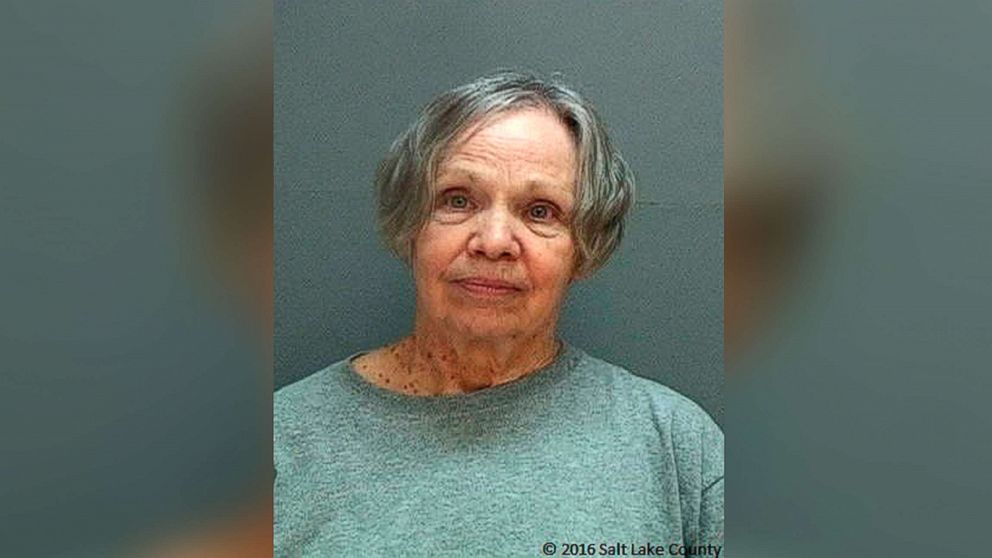
Convicted
arrow_forward
Wanda Barzee
Accomplice in the kidnapping of Elizabeth Smart
Wanda Barzee was Mitchell's wife and accomplice. She pleaded guilty to state kidnapping charges and was released in 2018 after serving approximately 15 years.
TestimonialKey
Mary Katherine Smart's Eyewitness Account
Elizabeth's 9-year-old sister Mary Katherine witnessed the abduction but kept silent for months out of fear. Her eventual identification of the kidnapper as "Emmanuel" — a man who had briefly worked as a handyman at the family home — was the investigative breakthrough that pointed police to Mitchell.
en.wikipedia.orgopen_in_newTestimonialKey
Elizabeth Smart's Testimony
Elizabeth Smart testified over two days at Mitchell's 2010 trial, providing a detailed first-person account of her nine-month captivity, the daily conditions, and the repeated sexual abuse she endured. Her composure and clarity during testimony was widely praised and was the prosecution's most powerful evidence.
en.wikipedia.orgopen_in_newDocumentaryKey
Public Sighting — America's Most Wanted Recognition
Mitchell and Barzee had appeared on America's Most Wanted on February 26, 2003. Within two weeks, a couple in Sandy, Utah, recognized them walking with Smart. Their call to police led directly to Elizabeth's rescue. The case is frequently cited as demonstrating the effectiveness of public awareness campaigns in missing persons cases.
Salt Lake City Police Department Booking Photo, Mar 12, 2003 (via CBS News)DocumentarySupporting
Mitchell's "Book of Immanuel David Isaiah" — Religious Journal
Mitchell had written a religious manifesto called the "Book of Immanuel David Isaiah" justifying his polygamous ideology and claiming divine authority. The document helped establish the ideological framework he imposed on Smart and was central to understanding his motive and methods.
en.wikipedia.orgopen_in_newDocumentarySupporting
Elizabeth Smart — Advocate and Author
Following her rescue, Elizabeth Smart became a prominent advocate for child safety and victims' rights. She has authored two books about her experience and founded the Elizabeth Smart Foundation. This photo, taken after her recovery, shows her as an adult in her advocacy role.
en.wikipedia.orgopen_in_new